Daito-ryu Aiki-Jujutsu — The Source of Aikido
Daito-ryu Aiki-Jujutsu is the mother school of Aikido — the secret combat art of the Takeda clan, which Morihei Ueshiba transformed into Aikido and Choi Yong-sul carried to Korea as Hapkido.
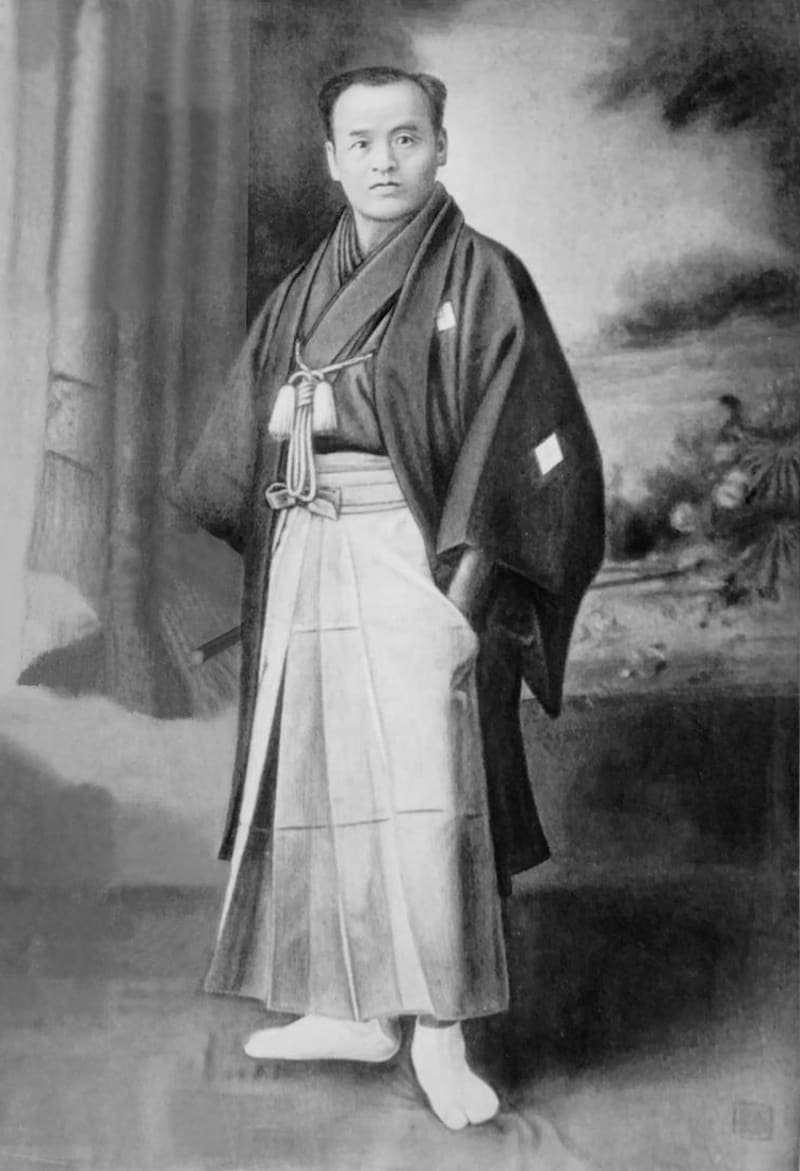
Lineage
Origins
Derived
Contents
Daito-ryu Aiki-Jujutsu (大東流合気柔術) is one of the most influential Japanese martial arts in history — and yet one of the least known. It is the direct parent school of Aikido, Hapkido, and several other modern martial arts. The foundation: Aiki (合気) — the principle of using the opponent’s force through precise synchronization of timing, direction, and leverage, rather than opposing it. Not force against force, but force through harmony. Takeda Sōkaku (1859–1943), by tradition the 32nd in the Takeda clan lineage, revitalized the system in the late 19th century and taught it on extensive travels through Japan — to thousands of students including the most important martial artists of the era. His most significant student: Morihei Ueshiba, who studied Daito-ryu intensively for decades and developed Aikido from it. The art remained long secret — part of the strictly controlled transmission of the Takeda clan — and is still actively practiced in small, traditional schools today.
History
Legendary Origins
Daito-ryu is said to trace back to Minamoto no Yoshimitsu (源義光, ~1045–1127) — a Heian-period nobleman who reportedly developed the system through the study of human anatomy while dissecting fallen warriors. This tradition is historically unverifiable but culturally significant.
The system was passed within the Aizu clan (a branch of the Takeda clan) in strict secrecy over centuries — as the private combat system of the ruling family.
Takeda Sōkaku — The Revitalization
Takeda Sōkaku (武田惣角, 1859–1943) was the decisive figure. As a child he learned Kenjutsu under Saigo Tanomo, the last household head of the Aizu clan, and Aikijujutsu in the secret tradition. As an adult he trained intensively: Kenjutsu, Sumo, spear — and integrated everything into his Daito-ryu.
1899: Takeda began teaching publicly — the first time the system was taught outside the Takeda clan. He traveled throughout Japan, teaching on a seminar basis to the elites: police officers, military officers, Judo masters.
Important students of Takeda:
- Morihei Ueshiba — studied Daito-ryu intensively 1915–1930s; founder of Aikido
- Choi Yong-sul — studied in Japan; founder of Hapkido
- Yoshida Kotaro — taught in Osaka and Tokyo
- Horikawa Kodo — significant second generation
The Aiki Principle
Aiki is the central and most difficult to explain concept of Daito-ryu. In practice it means:
The Daito-ryu master synchronizes with the attacker’s force — at exactly the right moment, at exactly the right angle — and redirects this force so that the attacker loses balance without the defender expending force.
Not blocking force — but absorbing and dissolving force.
| Concept | Meaning |
|---|---|
| Aiki | Harmony of Ki — synchronization with opponent’s force |
| Kuzushi | Balance breaking — prerequisite of every technique |
| Atemi | Vital point strikes — part of the system, often secret |
| Osaekomi | Hold-downs and control positions |
Core Techniques
Daito-ryu has over 2,000 documented techniques across several curriculum levels:
Ikkajo through Yonkajo — the four main joint-lock families (each with dozens of variations)
Aiki-no-jutsu — the advanced Aiki techniques using pure energy flow
Hiden Mokuroku — secret catalog: the highest level of transmission, passed only to selected students
Connections to Other Martial Arts
- Aikido — direct descendant; Morihei Ueshiba transformed Daito-ryu through spiritual deepening into Aikido
- Hapkido — Choi Yong-sul brought Daito-ryu techniques to Korea
- Jujutsu — Daito-ryu is a specialized lineage within the comprehensive Jujutsu tradition
Today
Daito-ryu is transmitted in various lineages — the most important are the Takumakai (Tokimune Takeda lineage) and the descendants of Horikawa Kodo. The art is rare but actively taught in small schools in Japan and internationally.
Related Articles
- Aikido
- Jujutsu
- Hapkido
- Bushido
- Takeda Sōkaku — the man with whom this art passes from legend into the archive
- Hwarangdo — this same art stands in the chronicle of an association that tells a Silla story
- Gongkwon Yusul — two of its named foundations lead back here, via Hakkō-ryū and hapkido
- Shorinji Kempo — the Hakkō-ryū trail, thinner here than in the Korean cases