The Martial Arts Encyclopedia
百者
Hyakusha
Origins, philosophy, lineages and masters from every martial tradition in the world — from Judo to Silat, from Zen to Bushido.
192 articles across 10 categories
Japanese Martial Arts
Judo, Karate, Aikido, Kendo and the many paths of Japanese Budo.

Japan ·1920s–1942 (official name)
Aikido — The Way of Harmonious Energy
Aikido is a Japanese martial art that seeks harmony over force — founded by Morihei Ueshiba as a synthesis of Daito-ryu, Zen philosophy and Omoto-kyo spirituality.
Japan ·1968 appointment · 1972 teacher's death · 1978 name in use
Bujinkan — the organisation, not the art
The umbrella for nine ryūha, headed by Masaaki Hatsumi. Its succession is documented, its ancestry is not — and both come from the same source.
Japan ·Legendary: Heian period (11th century); historically systematized: late 19th / early 20th century
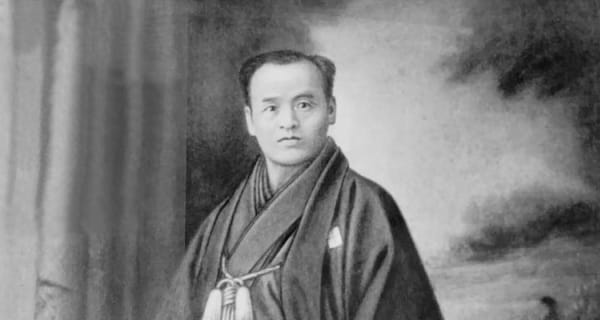
Daito-ryu Aiki-Jujutsu — The Source of Aikido
Daito-ryu Aiki-Jujutsu is the mother school of Aikido — the secret combat art of the Takeda clan, which Morihei Ueshiba transformed into Aikido and Choi Yong-sul carried to Korea as Hapkido.

Japan (Okinawa as origin) ·Okinawa: late 19th century; name given 1930; recognized as Budō in Japan 1933
Goju-ryu — Hard and Soft as Unity
Goju-ryu is the oldest and only officially Budō-recognized Karate style in Japan — founded by Chojun Miyagi, based on the principle that hardness and softness are inseparable.

Japan ·Origins mid-16th c.; name from 1932, seitei curriculum from 1969
Iaidō — The Art of the Draw
Iaidō is the Japanese art of cutting from the scabbard — solo forms with the sword, unified since 1969 by a standard seitei curriculum.

Japan ·1882
Judo — The Gentle Way
Judo is the martial art of the gentle way — founded in 1882 by Jigoro Kano, an Olympic discipline since 1964, built on maximum efficiency through throwing and groundwork.
+ 18 more — View all →
Korean Martial Arts
Taekwondo, Hapkido, Ssireum — traditions of the Korean peninsula.
Korea ·1996 (association); the name since 1998
Gongkwon Yusul — the Korean Art That Claims No Ancestry
Founded in 1996. The founder opens the account of his own training with a Japanese art — and that is exactly what makes this case unusual.

Korea ·Attested since antiquity; examination system 1392–1894, bow standardised c. 1900
Gungsul — Korean Archery at 145 Metres
The standard distance in Korean archery is 145 metres — five times that of kyūdō. Everything about the gakgung follows from that number.

South Korea ·1982
Haidong Gumdo — A 1982 Sword Art With a 7th-Century Ancestry
Founded in Anyang in 1982, tracing itself to 7th-century warriors. A Korean court settled in the 1990s which part of that is true.
Korea ·1948 (Choi Yong-sul returns to Korea)
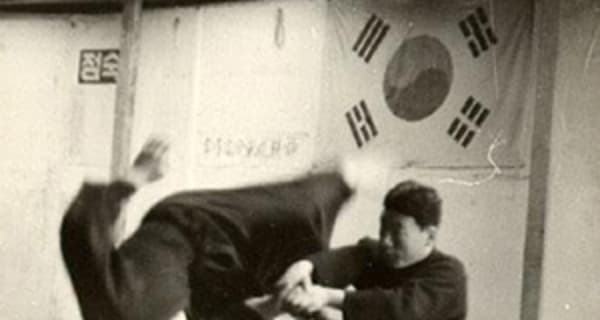
Hapkido — The Korean Way of Harmonious Power
Hapkido is Korea's art of harmonious power — a complete combat system of joint locks, throws, and kicking techniques rooted in the Japanese Daito-ryu tradition.

Korea ·Hwarang 6th c.; the code as a term 1910–1945; the martial art from 1960
Hwarangdo — A Code That Reached Silla by Way of Japan
The hwarang really existed. But the code of honour that carries their name arose under Japanese rule, as a Korean counterpart to bushido.

Korea ·1958 (founding); Korean roots: centuries old
Kuk Sool Won — Korea's Most Complete Martial Arts System
Korea's most comprehensive system, ordered in 1958 by In Hyuk Suh. He traces it to three old traditions — the founding is documented, the ancestry is not.
+ 6 more — View all →
Chinese Martial Arts
Kung Fu, Tai Chi, Wushu — thousands of years of tradition.

China ·Early 19th century
Baguazhang — The Eight Trigram Palms
Baguazhang is the circular internal Chinese martial art — founded by Dong Haichuan, built on eight trigrams and the continuous practice of walking the circle.

China ·16th–18th century
Bajiquan — The Eight Extremities of Explosive Combat
Bajiquan is a Chinese martial art from Hebei, renowned for explosive elbow and shoulder strikes in close range — for centuries the preferred style of imperial bodyguards.
China (Huizhou, Guangdong) ·In its present form from the early 20th century
Bak Mei — the Style Named After the Traitor
Bak Mei carries the name of the monk who, in the legend, betrayed Shaolin. The documented style begins with one man: Cheung Lai Chuen (1882–1964).

China ·Traditional styles since the Ming and Qing periods; competition form from 1958/1960
Changquan — the Long Fist and the Competition Style That Carries Its Name
Changquan denotes two different things: a northern Chinese family of styles and a competition style standardised from 1960. The two are constantly confused.
China ·As a term by the Ming period at the latest; earlier traces older still
Chin Na — Seizing and Controlling
Chin Na is not a martial art of its own but a category of technique — the seizing, locking and controlling embedded in nearly every Chinese system.
China (Guangdong) ·1836
Choy Li Fut — The Wide Fist of the South
Choy Li Fut joins southern Chinese arm technique to northern footwork — founded in 1836 by Chan Heung and named after his three teachers.
+ 15 more — View all →
Grappling
Wrestling, throwing, holding — ground arts of the world.

Brazil ·1925 (first Gracie academy); development through 1950s
Brazilian Jiu-Jitsu — The Art of Ground Fighting
Brazilian Jiu-Jitsu is the martial art of ground fighting — brought to Brazil by Mitsuyo Maeda, perfected by the Gracie family, immortalized by Royce Gracie at the first UFC.

England (Lancashire) ·Early 19th century; codified ~1870s
Catch Wrestling — British Wrestling with Submissions
Catch Wrestling is brutal British wrestling of the 19th century — with submissions, leg locks, neck cranks, and the legendary Snake Pit in Wigan as its world center.
Philippines (Visayas, Mindanao) ·Pre-colonial; practiced since ancient Philippine times
Dumog — Filipino Ground Grappling
Dumog is traditional Filipino grappling — born as a carabao-wrestling technique, close sibling of Escrima, focused on control points and balance disruption.

England (Lancashire) and the USA ·early 19th century; Olympic since 1904
Freestyle Wrestling — One Rule Apart, a Different Sport
A single rule separates freestyle from Greco-Roman — the grip below the waist. Everything else in both styles follows from it.
Iceland / Scandinavia ·Viking Age (~9th century); first written mention: 1325 (Jónsbók)
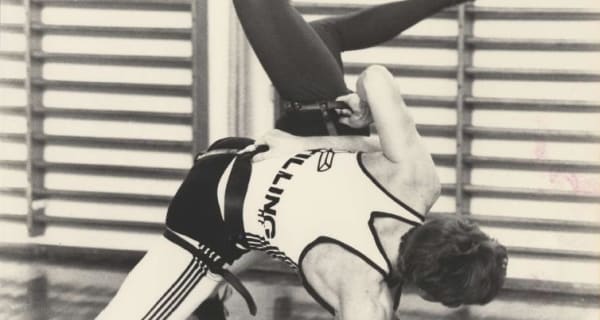
Glima — Viking Wrestling from Iceland
Glima is the traditional Scandinavian wrestling of the Vikings — Iceland's national sport since the 9th century, with three variants from elegantly technical to raw free-fight.

France (19th century); ancient inspiration: Greece and Rome ·Mid-19th century, 1848 (France); Olympics since 1896
Greco-Roman Wrestling — Olympics' Oldest Combat Sport
The only wrestling style at the 1896 Athens Olympics and continuously on the programme since 1908 — exclusively upper-body grips and spectacular throws.
+ 10 more — View all →
Striking
Punching, kicking, elbows, knees — striking arts compared.

England ·rulesets 1743, 1838, 1867; last title fight 1889; re-legalised 2018
Bare-Knuckle Boxing — 1867 Removed Two Things, Not One
The Queensberry rules took the bare hand and the wrestling out of prizefighting. Whether the first was a safety gain is still disputed.
Ancient Mediterranean; modern form England ·Antiquity; modern rules from 1743, Queensberry 1867
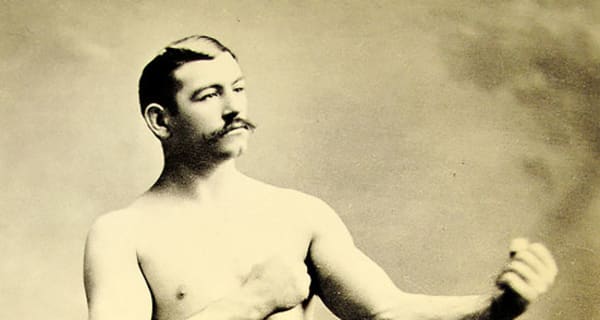
Boxing — The Sweet Science
Boxing reduces combat to two fists and the space between them — the West's oldest organised striking art and the template for almost every modern ring sport.
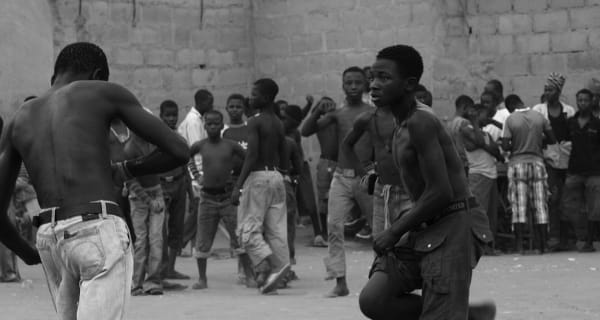
Nigeria (north), Niger, Chad ·Origin undatable; a guild practice of the Sahel, ethnographically documented since the 20th century
Dambe — One Hand Is the Spear, the Other the Shield
The Hausa fist fight divides the hands instead of mirroring them. One strikes, the other keeps the opponent at measured distance.
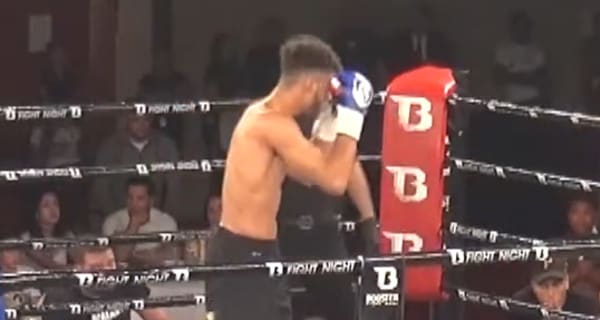
Japan, in parallel the USA ·From 1959; ruleset 1966; K-1 from 1993
Kickboxing — Fist and Foot in the Ring
Kickboxing emerged in the 1960s from karateka's dissatisfaction with point fighting — boxing hands, karate kicks, and a ring instead of a mat.

Myanmar (historically: Burma) ·Pyu Empire (2nd century BCE–11th century CE); modern form from 1950s
Lethwei — Burmese Boxing with Nine Weapons
Lethwei is Myanmar's ancient combat art — bareknuckle, with headbutt as the ninth weapon, no points scoring, and victories only by KO or submission.

Thailand (historically: Siam) ·Sukhothai period (13th–15th century) and earlier; modernized 1930s under King Rama VII
Muay Boran — The Ancient Thai Combat System
Muay Boran is the ancient Thai combat system predating modern Muay Thai — with headbutts, hemp rope bandages and lethal techniques now forbidden in sport.
+ 6 more — View all →
Weapons
Sword, staff, knife — weapons systems and their philosophy.

Japan ·Feudal Japan; systematized: early Edo period (~1605)
Bōjutsu — The Japanese Art of Staff Fighting
The Japanese art of staff fighting, made from humanity's oldest weapon. The famous victory over Musashi rests on a single source.

France ·Early 19th century (Paris); competition form: 1970s (Maurice Sarry)
Canne de Combat — French Stick Fighting
Canne de Combat is French stick fighting — developed in 19th-century Paris as self-defense for the elite, closely related to Savate, today an official competition sport.

Philippines ·Pre-14th century; first documented: 1521 (Magellan expedition)
Escrima / Arnis / Kali — The Filipino Weapon Art
Escrima is the Filipino martial art of stick, blade, and empty hand — the first martial art to prove fatal to a European conqueror (Magellan) in documented history.

Europe (France, Italy, Hungary) ·mask mid-18th c.; Olympic since 1896; FIE since 1913
Sport Fencing — the Line That Held, Because It Became a Sport
The European fencing line never broke. The price: almost every rule preserves a condition that no longer exists.

India (Punjab) ·15th century (founding of Sikhism); flourished: 17th–18th century (Sikh wars)
Gatka — The Weapon Tradition of the Sikhs
Gatka is the traditional martial art of the Sikhs — with wooden staves, swords, and shields, deeply rooted in the Sikh philosophy of Miri-Piri and alive at every Sikh festival.
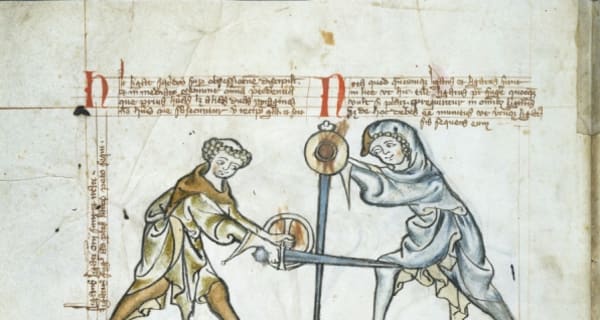
Europe (Holy Roman Empire, Italy, England) ·sources from c. 1300; the present movement since the 1990s
HEMA — the Martial Art That Admits Its Gap
The one major martial art that retrieves itself wholly from texts after a break — and for that very reason the best documented.
+ 11 more — View all →
Philosophy
Bushido, Zen, Do — the spiritual foundations of martial arts.
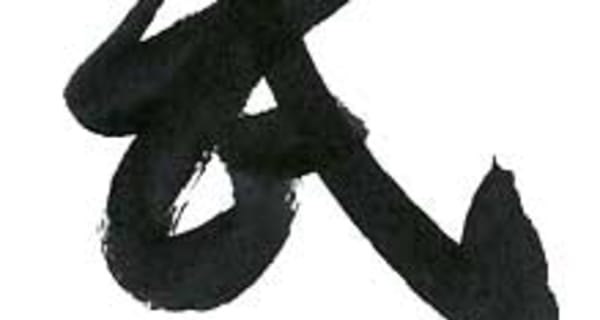
Japan ·Meiji era (1868–1912)
Budo — The Way as Destination
Budo is the philosophy of the Japanese martial way — the transformation of Bujutsu, the art of war, into a path of character and personal development.

Japan ·Edo period (17th–19th century) · codified 1900
Bushido — The Way of the Warrior
Bushido is the samurai code of honour — a canon of courage, loyalty and honour that continues to shape Japanese culture, martial arts and aesthetics to this day.

Fudoshin — The Immovable Mind
Fudoshin is the immovable mind — the inner stability that is shaken neither by danger nor by praise, neither by pain nor by success, remaining centered through all circumstances.

Japan / China / India ·Ancient (documented over 2,000 years ago)
Ki, Chi and Prana — The Life Energy of the Martial Arts
Ki, Chi and Prana name the same phenomenon across three cultures — the life energy that all East Asian martial arts regard as their invisible foundation.
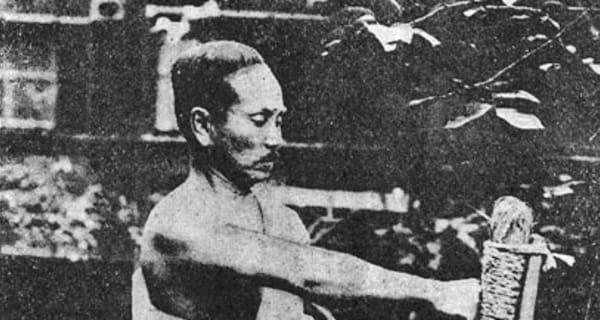
Kime — The Decided Moment
Kime means decision, not power. A decision became a muscular contraction — and it is exactly at this shift that the criticism begins.

Maai — Distance as a Measure of Time
Maai is usually translated as distance. The word means an interval in space and time — measured not in metres but in steps and fractions of a second.
+ 8 more — View all →
Masters
Portraits of founders and grandmasters — lifetimes of movement.

Ryūkyū / Japan ·1831–1915
Ankō Itosu — the Man Who Put Karate into Schools
Itosu brought karate into Okinawa's schools in 1901 — and justified it to the ministries in 1908 by its usefulness for military service.

India / China ·c. 5th–6th century
Bodhidharma — The Legend at the Origin of All Martial Arts
Bodhidharma (5th/6th c.) brought Chan Buddhism to China — whether he also taught the Shaolin martial arts is legend. But his cultural legacy is real and immense.

USA / Hong Kong ·1940–1973
Bruce Lee — The Man Who Reinvented Martial Arts
Bruce Lee (1940–1973) broke all boundaries between martial arts — his Jeet Kune Do and philosophy inspired MMA and a generation of fighters.

Brazil ·1902–1994
Carlos Gracie — The Patriarch of Brazilian Jiu-Jitsu
Carlos Gracie (1902–1994) learned Judo from Mitsuyo Maeda, founded the first Gracie Academy, and with his family created the world's most practiced ground fighting system.
Korea ·1918–2002
Choi Hong Hi — The Founder of Taekwondo
General Choi Hong Hi (1918–2002) created Taekwondo as Korea's national martial art — a life lived between military service, politics, and the dream of a global fighting system.

Japan / Okinawa ·1888–1953
Chojun Miyagi — Founder of Goju-ryu Karate
Chojun Miyagi (1888–1953) fused Okinawan hardness with Chinese softness into Goju-ryu — the karate school that inspired Mr. Miyagi in Karate Kid.
+ 24 more — View all →
Crosscutting
Connections, comparisons and cross-genre themes.

Myanmar (historically: Burma) ·Pagan Empire (1044–1287); flourished: Burmese-Siamese Wars (16th–18th century)
Bando — Myanmar's Animal Style Martial Art
Bando is Myanmar's traditional unarmed combat system — with nine animal styles, strong defensive philosophy, and a history reaching back to the Pagan Empire of the 11th century.

England (London) ·1898–1903; rediscovery from 2002
Bartitsu — the Synthesis Lasted Three Years, Its Parts a Century
The earliest documented attempt at mixed martial arts, London 1898. The synthesis lasted three years, its components a century.
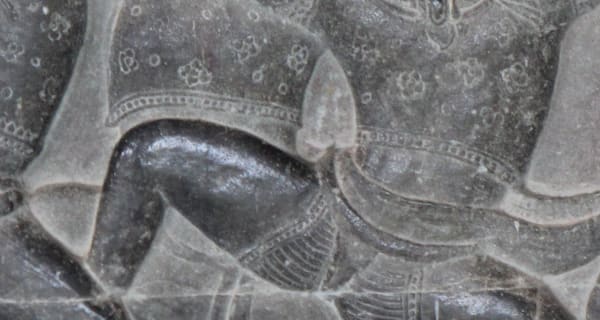
Cambodia ·Khmer Empire (9th–15th century); bas-reliefs in Angkor document practice since at least 900 CE
Bokator — Cambodia's Millennial Warrior Art
Bokator is Cambodia's oldest warrior martial art — documented for 1000 years in Angkor temple bas-reliefs, nearly extinguished by the Khmer Rouge, UNESCO World Heritage since 2022.

Brazil ·16th–18th century (slavery era); formalized 1930s
Capoeira — The Dancing Fight of the Enslaved
Capoeira is Brazil's Afro-Brazilian martial art — game, fight and dance in one, persecuted by police, now UNESCO Cultural Heritage and a symbol of cultural resistance.
Japan ·1882–1942
Dō and Jutsu — Four Pairs, and Why the Renaming Came Later Than the Story Says
Judo has carried that name since 1882, kendō only since 1920. What the four pairs of dates reveal about the renaming — and what they correct in the usual account.
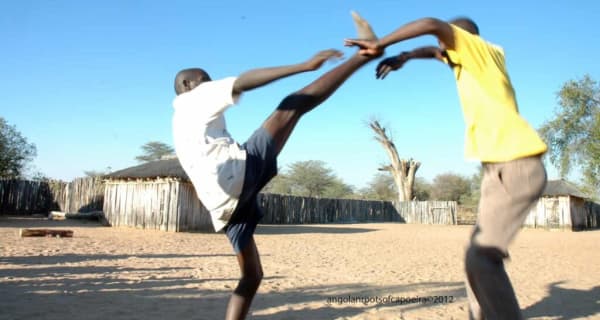
Angola ·First attested in the mid-1950s; practised until 1975
Engolo — Capoeira's Cousin, Not Its Mother
A herders' combat game from the Kunene, barely played since 1975. The story that it mothered capoeira is younger than television.
+ 16 more — View all →
Training & Techniques
Deep technical knowledge: biomechanics, conditioning, methodology from primary sources.
Breakfalls in Seven Systems — the Ground Decides, Not the Style
Why judoka slap the mat and traceurs never do. Breakfall training does not answer how to fall — it answers what the ground is.
Breakfall Programme — Twelve Weeks, Derived From Measurements
The difference between beginner and expert sits not in the neck but in hip, knee and trunk. A programme that trains exactly that.
Breathing Methods Compared — One Word for Two Jobs That Exclude Each Other
Breathing technique is meant to stiffen the trunk and calm you at once. It cannot do both — and that is where most explanations fall apart.
Breathing Programme — Two Tracks That Must Not Be Mixed
Six breaths a minute is a population midpoint, not your value. A programme with calibration — and two tracks that stay apart.
Conditioning — a Programme That Stops Before the Iron
Adaptation and damage look the same in the short term. A programme that therefore measures sensitivity rather than hardness — and stops before the iron.
Footwork in Eight Systems — the Question Is Whether the Feet May Cross
Eight systems, the same two legs. The question that separates them is inconspicuous and consequential — whether one foot may cross the other.
+ 18 more — View all →