Keiko Fukuda — the Same Woman, Three Institutions, Three Answers
Kanō's last student stood at 5th dan for nineteen years, because that was where the scale ended for women. The 10th dan never came from the Kōdōkan.
Contents
Overview
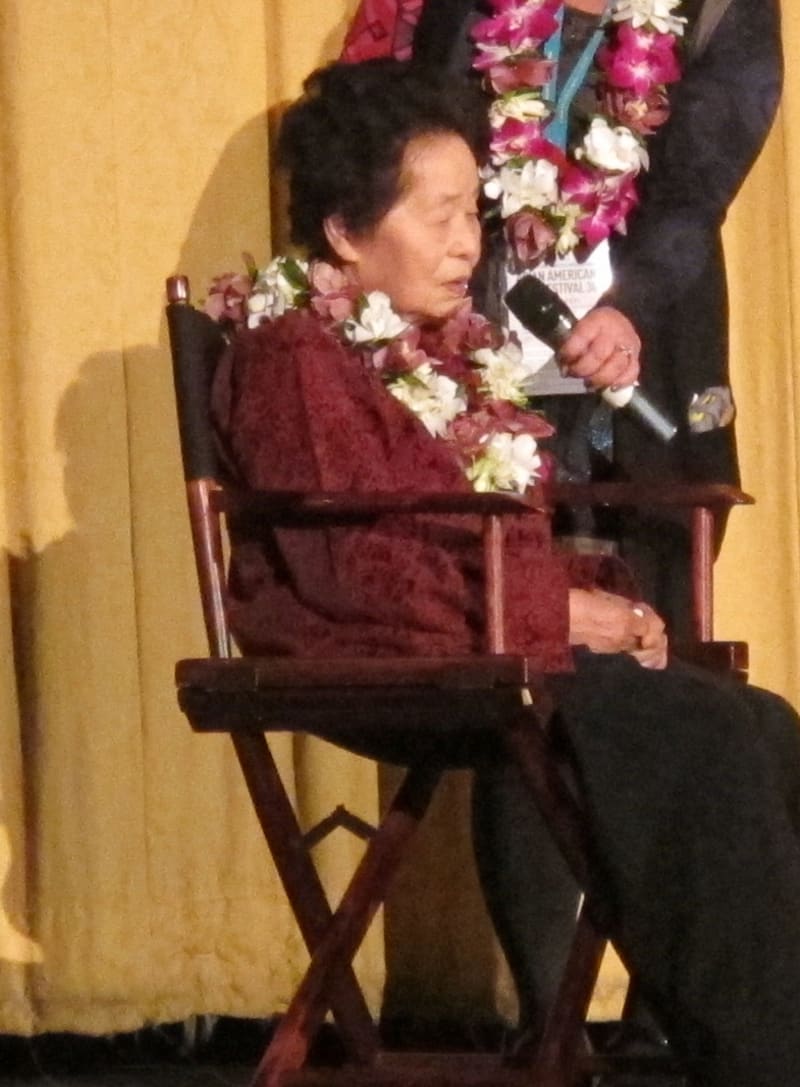
Keiko Fukuda was the highest-graded female judoka in history and the last living student of Kanō Jigorō. She is also the first woman in this encyclopaedia’s masters category — for fourteen portraits it was men only.
This article is not here to close a quota, though. It is here because her grading history is the single best piece of evidence for the argument of the grading systems comparison, and with a sharpness no other case in this collection matches.
The argument there is that a grading system does not measure ability but administers an organisation. With Fukuda that can be read off from dates, because the same person was graded differently by three federations at the same time. Her ability was not in dispute at any of those moments. The rules of the respective institution were.
| Born | 12 April 1913, Tokyo |
| Died | 9 February 2013, San Francisco (aged 99) |
| Art | Judo, with a focus on kata (especially Ju-no-kata) |
| Teacher | Kanō Jigorō, Kōdōkan |
| Known for | the highest dan grade ever reached by a woman |
| School | Soko Joshi Judo Club, San Francisco |
The origin: her grandfather taught Kanō
The starting point is unusual, and not without irony given what followed. Her grandfather Fukuda Hachinosuke, a master of Tenjin Shin’yō-ryū jūjutsu, was the first of the three jūjutsu teachers under whom Kanō Jigorō studied before founding judo.
In 1935 Kanō personally invited the twenty-two-year-old granddaughter to train at the Kōdōkan — out of respect for her late grandfather, and at a time when that was an unusual approach to make to a young Japanese woman. She was one of twenty-four women training there then.
That gives the starting position, and it is as strong as one could ask: a woman whose family had taught the founder, brought in by the founder himself, at the institution of origin. If anyone in this art was beyond question, it was her.
The grading history, in dates
| Year | Grade | Awarded by |
|---|---|---|
| 1953 | 5th dan | Kōdōkan |
| November 1972 | 6th dan | Kōdōkan — as the first woman ever above 5th dan |
| 1994 | 8th dan | Kōdōkan |
| 2001 | 9th dan | USJF (United States) |
| 2006 | 9th dan | Kōdōkan |
| 28 July 2011 | 10th dan | USA Judo |
| 10 September 2011 | 10th dan | USJF |
| — | 10th dan | never awarded by the Kōdōkan |
Two points of care before anything is concluded from this.
First: the reason for the standstill is documented, not inferred. There was a rule barring women from promotion above 5th dan. Her promotion in 1972 followed a letter campaign against precisely that rule. Fukuda herself later called the Kōdōkan old-fashioned and sexist on this question — that is her wording, not this article’s.
Second: the widely quoted figure is wrong. One often reads that she stood at 5th dan for thirty years. Between 1953 and November 1972 there are nineteen years. That is still extraordinarily long, and the finding does not need the exaggeration.
What the dates show
The most revealing part of the table is not the long standstill but the divergence at the end.
- For the 9th dan there are five years between the American and the Japanese federation. The same woman, the same abilities, two institutions, two dates.
- The 10th dan was awarded in 2011 by two American federations six weeks apart. The Kōdōkan — the institution that created the grade in the first place and has awarded it to a number of men — never gave it to her.
That does not merely illustrate the grading article’s argument; it evidences it. When three organisations grade the same person differently at the same time, the grade is not measuring the person. It is a statement by the awarding body about itself.
And a second confirmation comes with it, one the grading article states in general terms: at the high dan grades nothing is tested any more, only conferred. A 10th dan at ninety-eight is the clearest possible case — nobody claims an examination took place. It was a decision, and it could have been taken at any earlier point.
Her field was kata, not competition
An objection suggests itself and therefore belongs here: perhaps she simply lacked the competitive record on which a grade could be hung?
The objection fails, for two reasons. First, her field was kata, above all the Ju-no-kata, where she was internationally regarded as the authority; in 1973 she published Born for the Mat, a Kōdōkan kata textbook for women. Second — and this is the real point — the high dan grades in judo are not competitive grades at all. No holder of a 9th or 10th dan fought their way to it. The standard she supposedly failed is applied to nobody.
What it cost her
Fukuda never married, and she named the reason herself: her marriage was to judo. For a Japanese woman of her generation that was not an eccentricity but a decision with a price — it sidestepped the expectation that would have ended her career.
The rest of her path is emigration. In 1953 she first travelled to Oakland at a judo club’s invitation and stayed nearly two years. In the mid-1960s she returned with a teaching post at Mills College in Oakland and stayed for good. In San Francisco she founded the Soko Joshi Judo Club, a women-only school, and taught there for close to forty years.
One can read that as a success story. One can also read it as the dates suggest: the highest-graded female judoka in history made her career outside the institution that had invited her in.
Legacy
Fukuda died on 9 February 2013 in San Francisco, a few weeks short of her hundredth birthday and eighteen months after the 10th dan. Her club continues, as does a foundation in her name; the documentary Mrs. Judo: Be Strong, Be Gentle, Be Beautiful (2012, directed by Yuriko Gamo Romer) appeared in the last year of her life.
Her motto — Tsuyoku, Yasashiku, Utsukushiku, “be strong, be gentle, be beautiful” — is often quoted as life wisdom. Against the background of her grading history it reads more sharply: it is a standard she set for herself, because the official one was withheld from her for nineteen years.
Connections to other martial arts
- Judo — her art, and through the Ju-no-kata the part of it least visible in competition.
- Jigorō Kanō — her teacher, and through her grandfather also her family’s student. She was the last living person who had learned from him.
- Grading systems compared — the article whose argument her case evidences. Anyone wanting a single demonstration that a grade describes the institution rather than the person should take this one.
- Jūjutsu — her grandfather’s art, Tenjin Shin’yō-ryū, and thus one of judo’s roots.
- Budō — the claim against which her case has to be measured, and where it stays uncomfortable.
Today
Women reach high dan grades in judo today, and the rule on which Fukuda hung for nineteen years no longer exists. The 10th dan, however, still has not been awarded by the Kōdōkan to a woman — Fukuda’s came from the United States.
Two sentences are useful for placing her case, and they do not contradict each other. First: her story is not an indictment of judo but an observation about institutions, and the same observation could be made in many fields. Second: it is nonetheless evidence and not a misunderstanding — the rule was written down, the campaign against it is documented, and the dates are in the table.
The quietest way to sum it up is her own curriculum vitae. She practised judo for seventy-six years and in the last of them received a grade no woman had held before. Both are true, and the second is the smaller half.
Related articles
- Judo
- Jigorō Kanō
- Grading Systems Compared
- Jūjutsu
- Budō
- Edith Garrud — the contrasting case: Garrud worked against an institution, Fukuda for recognition inside one
- Rusty Kanokogi — the same problem, a different answer: Fukuda waited for the institution, Kanokogi did not