Bajiquan — The Eight Extremities of Explosive Combat
Bajiquan is a Chinese martial art from Hebei, renowned for explosive elbow and shoulder strikes in close range — for centuries the preferred style of imperial bodyguards.
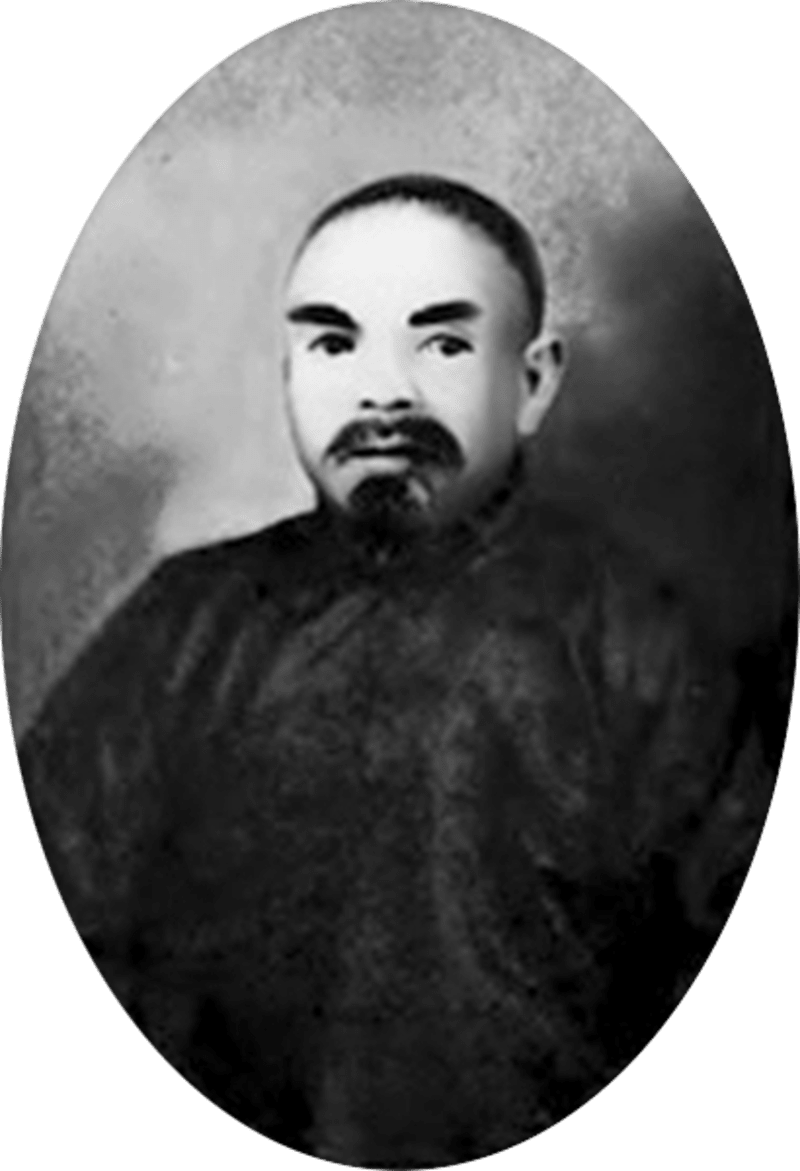
Lineage
Origins
Contents
Bajiquan (八极拳, “Fist of the Eight Extremities”) is a Chinese martial art originating from Cangzhou, Hebei Province, renowned for its explosive close-range power. Its hallmarks: powerful elbow and shoulder strikes, a characteristic charging entry step (Zhenjiao), and the principle of Fa Jin — explosive power released from the entire body. For centuries, Bajiquan was the preferred combat style of Chinese bodyguards. Mao Zedong, Chiang Kai-shek, and China’s last emperor Puyi were all protected by Bajiquan masters. Today it is practiced worldwide, particularly in Taiwan, Japan, and the Chinese diaspora. The name derives from the I Ching and means “extension in all directions” — the universe stretching toward all eight extremes. The art is considered one of China’s most powerful striking systems, rooted in Taoism and the concept of eight cosmic directions.
History and Founders
The earliest written mention of Bajiquan appears in the military treatise Jixiao Xinshu by General Qi Jiguang (1528–1588) — indicating the art was already established in the 16th century.
The first clearly documented master was Wu Zhong (1712–1802), a Hui Chinese from the Wu clan settlement of Mengcun in Cangzhou. He taught Bajiquan alongside Piguaquan as an integrated fighting system, forming the basis of all later Wu-lineage Bajiquan styles. The art’s original name was “Baziquan” — named after the loosely held, rake-like fist position — but was renamed due to a crude connotation in the local dialect.
The most legendary master was Li Shuwen (1864–1934), known as “God of Spear Li” and famous for his quote: “I do not know what it is like to hit a man twice.” A Beijing opera martial performer and experienced fighter, he reunified Bajiquan and Piguaquan which had separated over time.
Li Shuwen’s students directly shaped Chinese history:
- Huo Dian Ge — bodyguard to the last Emperor Puyi
- Li Chenwu — bodyguard to Mao Zedong
- Liu Yunqiao — intelligence agent and trainer of Chiang Kai-shek’s bodyguards
Technical Foundations
Bajiquan uses all eight extremities as weapons: fist, forearm, elbow, shoulder, hip, thigh, knee, and foot. The Zhenjiao charging step allows explosive bridging of distance while simultaneously activating the ground as a power source.
| Concept | Chinese | Meaning |
|---|---|---|
| Fa Jin | 发劲 | Explosive power release |
| Zhenjiao | 震脚 | Stamping entry step |
| Ka | 卡 | Clamping grip / control |
| Chan | 缠 | Wrapping the opponent |
| Liu He | 六合 | Six Harmonies — hip, shoulder, elbow connected |
Core Techniques
Liu Da Kai (六大开) — Six Great Openings: the six fundamental attack principles that break the opponent’s center. Each opening is simultaneously offensive and defensive.
Ba Zi Gong (八字功) — Eight-Character Exercises: foundational conditioning for power and timing.
Main forms:
- Xiaobajiquan — small Bajiquan frame, foundation form
- Dabajiquan — large Bajiquan frame, extended
- Liuhequan — Six Harmonies Fist, combined with Piguaquan
Characteristic strikes: Shoulder ram (Kaozhang) · Elbow thrust (Dingzhou) · Heel stamp (Zhenjiao)
Philosophy
The name “Baji” derives from the I Ching (易经): it means “extension in all directions” — the universe in its eight extremes. The philosophical foundation is Taoist:
- Energy flow over muscular strength — energy circulates through the body, not forced by it
- Earth connection — every strike originates from the ground, not the arm
- Unity of the Six Harmonies (Liu He): shoulder with hip, elbow with knee, hand with foot
“In Bajiquan, the mind arrives first, then the body.” — Wu school teaching tradition
Styles and Schools
| School | Origin | Distinctive Feature |
|---|---|---|
| Wu School Mengcun | Cangzhou, Hebei | Most original lineage, Wu clan |
| Li School (Li Shuwen lineage) | Cangzhou | Bajiquan + Piguaquan combined |
| Liu Yunqiao lineage | Taiwan | Spread across East Asia and worldwide |
| Competition Wushu | Modern | Stylized tournament variant |
Connections to Other Martial Arts
- Piguaquan — sister style, traditionally taught together; complements Baji’s close-range with long-arm techniques
- Xingyiquan — also a northern Chinese martial art with strong direct power application and Fa Jin principle
- Kung Fu / Wushu — Bajiquan belongs to the northern Chinese Wushu tradition (Beiquan)
- Taijiquan — philosophically related (Taoism, Liu He), technically opposite: Baji is explosively direct, Taiji soft and circular
Today
Bajiquan is practiced primarily in China, Taiwan, and Japan. In Japan it gained prominence through Liu Yunqiao and is closely connected to martial arts manga culture — Kenichi and other works reference it explicitly.
Criticism: Modern Wushu tournament forms have substantially altered Bajiquan. Many teachers lament the loss of the original Fa Jin principle in favor of aesthetic choreography.
In military and security contexts, Bajiquan continues to be trained. The People’s Liberation Army uses it in certain units as a close-combat foundation.
Related Articles
- Kung Fu & Wushu
- Xingyiquan
- Budo
- Changquan — a northern style that pointedly did not feed into the competition form