Goju-ryu — Hard and Soft as Unity
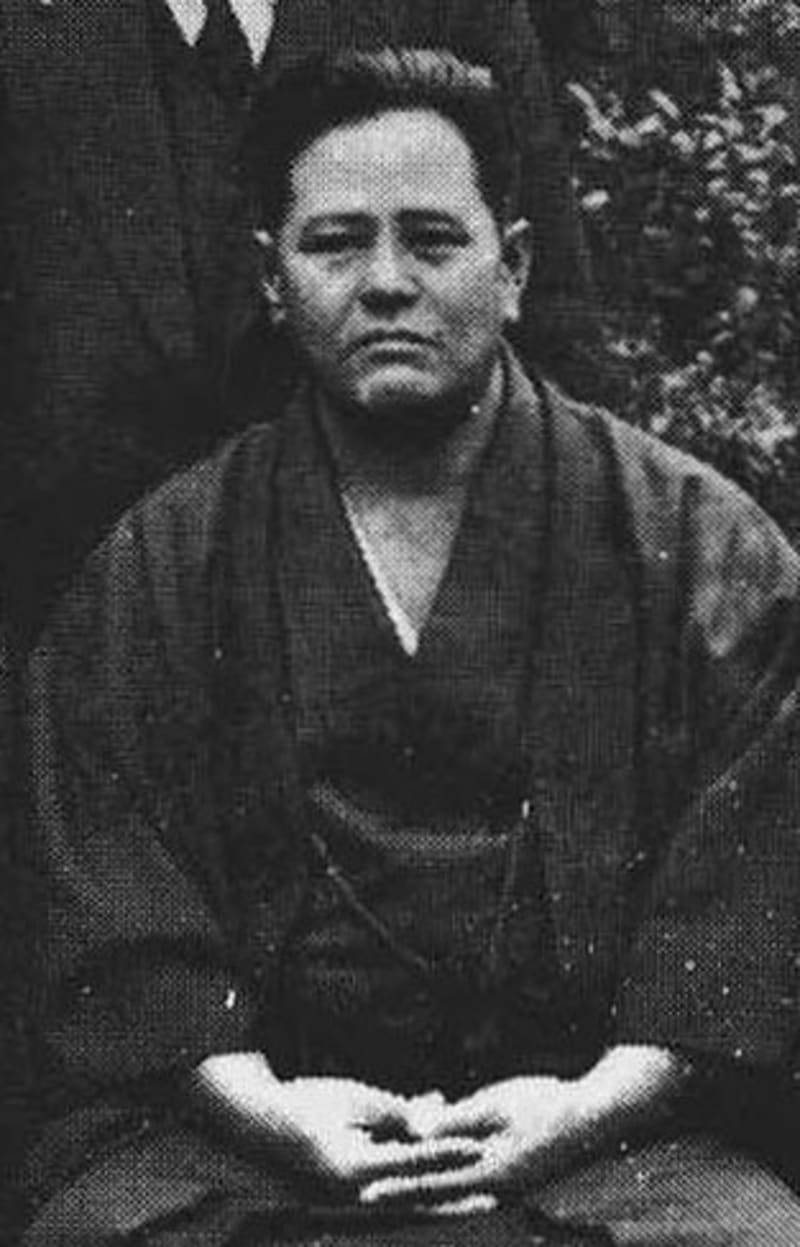
Goju-ryu is the oldest and only officially Budō-recognized Karate style in Japan — founded by Chojun Miyagi, based on the principle that hardness and softness are inseparable.
Lineage
Origins
Contents
Goju-ryu (剛柔流, “Hard-Soft Style”) is one of the four major traditional Okinawan Karate styles and the only Karate style officially recognized as Budō by the Dai Nippon Butoku Kai (Japan’s highest martial arts authority) in 1933 — the first and only Karate style with complete historical documentation in both Okinawa and Japan. Founded by Chojun Miyagi (1888–1953), Goju-ryu is deeply rooted in the traditions of Okinawan Naha-te and southern Chinese Kung Fu (particularly from Fujian Province). The foundational principle: Go (剛, hard) — closed fist attacks, direct linear force — and Ju (柔, soft) — open hand techniques, circular movements. Both principles are inseparable, like Yin and Yang. The name derives from the Bubishi (武備志), a classical Chinese martial arts text revered in Okinawa.
History and Founders
Chojun Miyagi was born on April 25, 1888 in Naha, Okinawa — into a wealthy merchant family. As a child he began Karate under master Kanyro Higaonna (1853–1915), who had himself studied White Crane Kung Fu in Fuzhou, Fujian Province (China).
After Higaonna’s death in 1915, Miyagi himself traveled to China — to Fuzhou — to study the system’s sources and deepen connections to the Chinese origins. This direct China connection gives Goju-ryu a special authenticity among Karate styles.
1930: Miyagi publicly named his style Goju-ryu — inspired by the line from the Bubishi: “Ho wa Gōjū wa Donto su” — “The law of inhaling and exhaling is hardness and softness.”
1933: Goju-ryu became the first and only Karate system officially recognized as Budō by the Dai Nippon Butoku Kai. All other Karate styles followed only later.
Miyagi’s most famous student: Gogen Yamaguchi (1909–1989), who established Goju-ryu on the Japanese mainland and further developed it — known as “The Cat” for his acrobatic techniques.
Technical Foundations
Goju-ryu clearly distinguishes between Go and Ju techniques:
| Go Techniques | Ju Techniques |
|---|---|
| Seiken (knuckle fist) | Shuto (sword hand) |
| Direct straight punches | Circular movements |
| Hard blocks | Redirections |
| Deep stances | High mobility |
Sanchin (三戦) is Goju-ryu’s most fundamental Kata — an isometric posture exercise with controlled breathing (Ibuki). During the Kata all muscles tense simultaneously, breathing pauses are actively used, and a master can test execution by striking the student’s body. Sanchin simultaneously trains physical strength, breath control, and mental focus.
Kata
Goju-ryu has 12 core Kata:
Kaishu-Kata (open hand): Saifa · Seiyunchin · Shisochin · Sanseru · Sepai · Kururunfa · Sesan · Suparinpei (the most complete Kata in the system)
Heishu-Kata (closed hand): Sanchin · Tensho (the most spiritual Kata)
Tensho (転掌, “Turning Palms”) is the Ju complement to Sanchin: flowing, circular hand techniques with controlled breath — Yin to Sanchin’s Yang.
Breath Work — Ibuki
Conscious breath control (Ibuki, 息吹) is Goju-ryu’s most distinctive element. Ibuki has two forms:
- Ibuki — powerful, audible exhalation at the moment of striking — Go principle
- Nogare — gentle, silent exhalation — Ju principle
The integration of breath control into all techniques connects Goju-ryu with Chinese internal martial arts and Qigong practices.
Philosophy
Goju-ryu teaches: No extreme is complete. Who is only hard breaks — who is only soft has no power. The complete fighter integrates both qualities depending on situation.
This duality reflects the Yin-Yang principle: hardness and softness need each other, define each other, arise from each other.
“The universe itself contains both hardness and softness; so must man.” — from the Bubishi, Hakku Kenpō (“eight laws of the fist”); Miyagi took the style name from this line, he did not write it
Connections to Other Martial Arts
- Shotokan — sibling style from Okinawa; Shotokan emphasizes longer stances and linear power, Goju-ryu shorter stances and circular movement
- Kyokushin — Mas Oyama, Kyokushin’s founder, studied Goju-ryu under Gogen Yamaguchi; Kyokushin is in many ways a radicalization of the Go principle
- White Crane Kung Fu — direct ancestor through Kanyro Higaonna’s China studies
Today
Goju-ryu has several international organizations: IOGKF (International Okinawan Goju-ryu Karate-do Federation) and various Yamaguchi lineages. It is practiced worldwide, is one of the four styles recognised by the Japanese umbrella body and was therefore represented at karate’s only Olympic appearance to date.
Related Articles
- Shotokan Karate
- Kyokushin Karate
- Wado-ryu
- Budo
- Kime — kime, chinkuchi and the Okinawan counter-position
- Hojo Undo — the canon of tools Miyagi assembled — including the kongōken from Hawaii
- Kata and Kumite — what kata stores and competition is not allowed to apply
- Breathing Methods Compared — why ibuki and nogare need two names — and are two physiologies
- Breathing Programme — ibuki and nogare trained as separate tracks — and the matter of the glottis
- Okinawan Karate — Naha was the harbour — the channel of transmission ran through trade
- Punching Structure Programme — punching structure at the device, with counter-positions instead of certainties
- Pangai-noon — the same city a generation later — two separate Sanchin out of Fuzhou
- Grip Strength Programme — a programme for the style devices; the kongōken shows in it how open the tradition was
- Chōjun Miyagi — the founder of the style; he also codified the hojo undo canon
- Kenwa Mabuni — the second line out of Higaonna Kanryō; Mabuni and Miyagi shared a teacher
- Kanbun Uechi — the other Okinawan line with a Chinese root and sanchin at its core