Shotokan Karate — The Way of the Empty Hand
Shotokan is the world's most widely practiced Karate style — brought from Okinawa to Japan by Gichin Funakoshi, named after his poet's pen name, today with tens of millions of practitioners.
Lineage
Origins
Contents
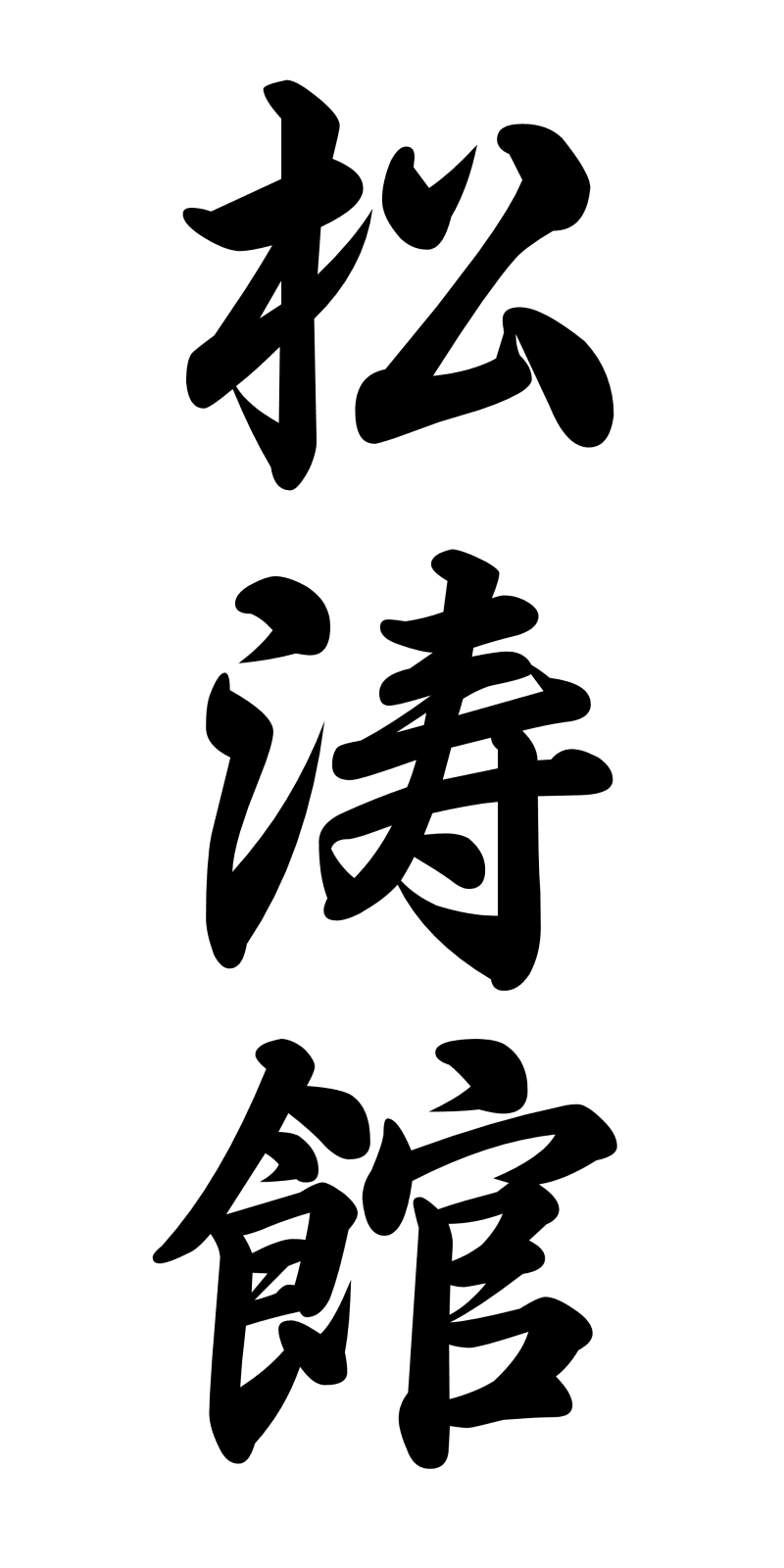
Shotokan (松濤館, “Hall of the Waving Pines”) is the world’s most practiced Karate style and the martial art that has most shaped the Western image of Karate. Founded by Gichin Funakoshi (1868–1957) — the “father of modern Karate” — Shotokan arose from the synthesis of two Okinawan combat arts: Shorei-ryu and Shorin-ryu. Funakoshi brought Karate from Okinawa to mainland Japan in 1922 and profoundly transformed it in the process: he replaced the Chinese characters for “Kara” (Tang Dynasty, meaning Chinese) with the homophone “Kara” (empty) — from “China hand” to “Empty Hand”. This name change was politically astute (Karate Japanized) and philosophically deep (emptiness as a Zen concept). Shotokan emphasizes long, deep stances, powerful strikes and kicks, and an extensive Kata tradition. The style is carried today by several competing umbrella bodies — a consequence of the splits after Funakoshi’s death, and the reason there is no single “Shotokan federation”.
History and Founders
Gichin Funakoshi was born on November 10, 1868 in Shuri, Okinawa — the same year Japan began the Meiji Restoration. As a sickly child he began training Karate under Anko Azato and Anko Itosu — both grandmasters of the Okinawan martial arts tradition.
Funakoshi taught in Okinawa for years before traveling to mainland Japan in 1917 to demonstrate Karate. The pivotal moment: 1922, when he was invited to demonstrate at the first Sports Exhibition of the Japanese Ministry of Education. The demonstration was a triumph — and Funakoshi decided to remain in Tokyo.
He taught initially at Keio University and later at other Tokyo universities. His students hung a sign above the entrance of his dojo reading “Shōtōkan” — derived from Funakoshi’s poet’s pen name “Shōtō” (松涛, Waving Pines). This is how the style received its name.
Yoshitaka Funakoshi (1906–1945), Gichin’s son, was instrumental in technical development: he introduced deeper stances, more powerful hip rotation, and new combat forms — substantially shaping modern Shotokan.
1949: Founding of the Japan Karate Association (JKA) by Funakoshi’s students. The JKA systematized Shotokan and spread it worldwide.
Technical Foundations
Shotokan is known for its characteristic deep, stable stances:
| Stance | Term | Characteristic |
|---|---|---|
| Zenkutsu Dachi | 前屈立ち | Deep forward stance — basic stance |
| Kiba Dachi | 騎馬立ち | Horse stance, wide and deep |
| Kokutsu Dachi | 後屈立ち | Back stance, weight rear |
| Neko Ashi Dachi | 猫足立ち | Cat foot stance, light |
Attack techniques (Waza):
- Oi-Zuki — stepping punch
- Gyaku-Zuki — reverse punch
- Mae-Geri — front kick
- Yoko-Geri — side kick
- Mawashi-Geri — roundhouse kick
Kata
Kata (形) — prescribed combat sequences against imaginary opponents — are the heart of Shotokan. Funakoshi adopted and Japanized Okinawan Kata, renamed the Pinan series to Heian, and developed the modern Kata curriculum.
Shotokan Kata groups:
- Heian (Shodan–Godan) — 5 foundation Kata
- Tekki (Shodan–Sandan) — 3 horse-stance Kata
- Bassai Dai/Sho, Kanku Dai/Sho — intermediate Kata
- Unsu, Gankaku, Hangetsu — advanced Kata
- Nijushiho, Sochin, Jion — master Kata
Kumite
Kumite (組手, “hand weaving”) is the sparring component of Shotokan. Three forms:
- Ippon-Kumite — single-attack exercises
- Sanbon-Kumite — three-attack sequences
- Jiyu-Kumite — free sparring
In competition Kumite, Shotokan dominates at international level — under WKF rules as well as at the sport’s only Olympic appearance to date.
Philosophy
The Niju Kun (二十訓) — Funakoshi’s 20 precepts — are the philosophical foundation of Shotokan:
- “Karate begins and ends with respect” (Rei)
- “There is no first attack in Karate” (Karate ni sente nashi)
- “Karate is an aid to justice”
“The ultimate aim of karate lies not in victory or defeat, but in the perfection of the character of its participants.” — Gichin Funakoshi, Karate-dō: My Way of Life (not one of the Nijū Kun)
Dojo-Kun (道場訓) — the five Dojo rules, recited after each training session: Seek perfection of character · Be faithful · Be sincere · Respect others · Refrain from violent behavior.
Styles and Organizations
| Organization | Distinctive Feature |
|---|---|
| JKA (Japan Karate Association) | Oldest, technically traditional |
| SKA (Shotokan Karate of America) | Strongly Western-influenced |
| SKIF (Shotokan Karate-Do International Federation) | Hirokazu Kanazawa lineage |
| ISKF | International, JKA-aligned |
Connections to Other Martial Arts
- Kyokushin Karate — arose from Shotokan through Mas Oyama; Kyokushin is the harder, full-contact variant
- Wado-ryu — also influenced by Shotokan; Hironori Ohtsuka was Funakoshi’s student
- Taekwondo — Korean martial art strongly influenced by Shotokan; many early Taekwondo masters trained Shotokan
Today
Shotokan is by far the world’s most practiced Karate style. The Olympic Karate of Tokyo 2020 — held in 2021 and still the sport’s only appearance at the Games — followed the WKF rules and was therefore largely based on Shotokan rules and technique.
The JKA has branches in over 100 countries; estimates speak of 70–100 million Shotokan practitioners worldwide.
Related Articles
- Kyokushin Karate
- Taekwondo
- Aikido
- Bushido
- Budo
- Kime — terminal bracing and the objection to practising in the air
- Makiwara — Funakoshi called it the most important equipment — today it is rarely in the dojo
- Kata and Kumite — Gigō Funakoshi, Nakayama Hakudō and the origin of the deep stances
- Okinawan Karate — what became of the Shuri line after it left Okinawa
- Kata and Bunkai Programme — a procedure that makes failures visible instead of explaining them away
- Ankō Itosu — Funakoshi’s teacher; the pinan kata of this line come from him
- Matsumura Sōkon — at the start of this line, via Itosu and Asato