Korean Martial Arts
Taekwondo, Hapkido, Ssireum — traditions of the Korean peninsula.
12 articles
Korea ·1996 (association); the name since 1998
Gongkwon Yusul — the Korean Art That Claims No Ancestry
Founded in 1996. The founder opens the account of his own training with a Japanese art — and that is exactly what makes this case unusual.

Korea ·Attested since antiquity; examination system 1392–1894, bow standardised c. 1900
Gungsul — Korean Archery at 145 Metres
The standard distance in Korean archery is 145 metres — five times that of kyūdō. Everything about the gakgung follows from that number.

South Korea ·1982
Haidong Gumdo — A 1982 Sword Art With a 7th-Century Ancestry
Founded in Anyang in 1982, tracing itself to 7th-century warriors. A Korean court settled in the 1990s which part of that is true.
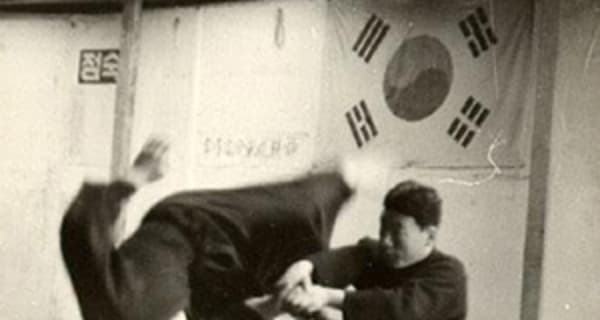
Korea ·1948 (Choi Yong-sul returns to Korea)
Hapkido — The Korean Way of Harmonious Power
Hapkido is Korea's art of harmonious power — a complete combat system of joint locks, throws, and kicking techniques rooted in the Japanese Daito-ryu tradition.

Korea ·Hwarang 6th c.; the code as a term 1910–1945; the martial art from 1960
Hwarangdo — A Code That Reached Silla by Way of Japan
The hwarang really existed. But the code of honour that carries their name arose under Japanese rule, as a Korean counterpart to bushido.

Korea ·1958 (founding); Korean roots: centuries old
Kuk Sool Won — Korea's Most Complete Martial Arts System
Korea's most comprehensive system, ordered in 1958 by In Hyuk Suh. He traces it to three old traditions — the founding is documented, the ancestry is not.

Korea ·Joseon; manuals of 1598, 1759 and 1790
Sibpalgi — A Dated Manual and an Art Without a Line
Korea owns the dated martial arts manual that is missing elsewhere. Only the art called sibpalgi today has no line running back to it.

Korea ·Goguryeo period (37 BCE–668 CE); documented from the 4th century
Ssireum — Korea's Traditional Wrestling
Ssireum is Korea's traditional wrestling — practiced since the 4th century, fought with belts around hip and thigh in a sand ring, deeply embedded in Korean folk culture.

Korea ·Goryeo (918–1392) and Joseon (1392–1897); recorded from the 12th century
Subak — Korea's Most Cited and Least Known Martial Art
Subak is called the ancestor of Korea's martial arts. What the sources actually contain is remarkably little — and that is what makes the case interesting.

Korea ·Joseon period (1392–1897) and earlier; documented from the 18th century
Taekkyeon — Korea's Oldest Living Martial Art
Taekkyeon is Korea's oldest living martial art — rhythmic, dance-like, nearly wiped out by Japanese occupation, and in 2011 the first martial art awarded UNESCO Cultural Heritage status.

Korea ·1955 (official name)
Taekwondo — The Way of the Foot and Fist
Taekwondo is Korea's premier martial art — defined by explosive kicking techniques and dynamic athleticism, an Olympic discipline since the Sydney 2000 Games.

Korea ·1945 (Moo Duk Kwan founded); 1950s naming as Tang Soo Do
Tang Soo Do — Korea's Classical Striking Art
Tang Soo Do is Korea's classical striking martial art — synthesized by Hwang Kee from Korean, Chinese, and Okinawan sources, precursor to modern Taekwondo.