Uechi-ryu — Okinawa's Hardest Karate Style
Uechi-ryu is Okinawa's hardest traditional Karate style — distilled by Kanbun Uechi in China from panther, crane, and dragon techniques, renowned for extreme body conditioning.
Lineage
Contents
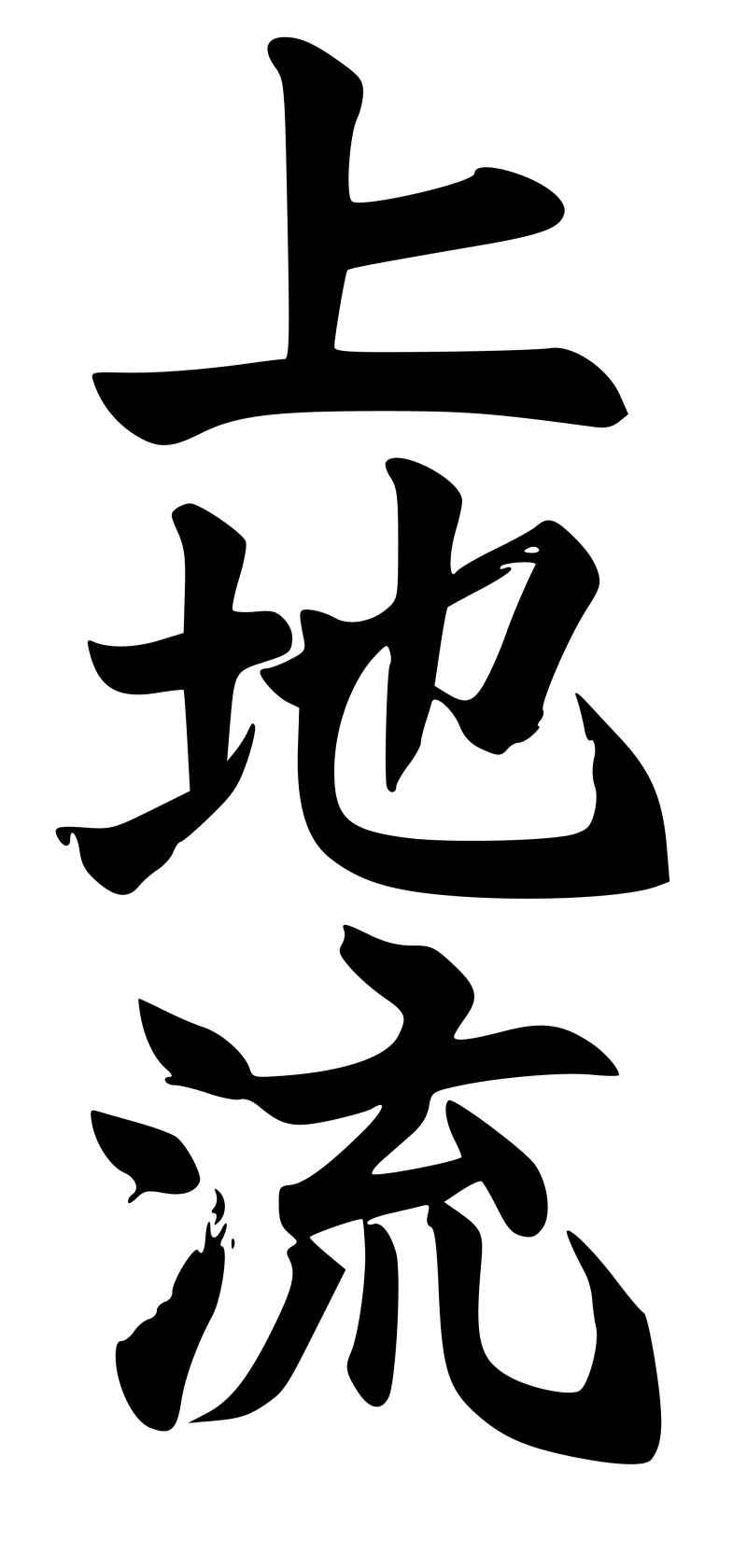
Uechi-ryu (上地流, “Style of Uechi”) is one of the four traditional Okinawan Karate styles and possibly the most directly connected to Chinese martial arts. Founded by Kanbun Uechi (1877–1948), who spent 13 years studying in Fujian Province, China under Chinese masters, Uechi-ryu develops directly from the Chinese system Pangai-noon (半硬軟, “half-hard, half-soft”). The three inspiration animals: Panther (strength and explosive energy), Crane (precision and standing-leg control), Dragon (softness exploding into hardness). What distinguishes Uechi-ryu from other Karate styles: an extraordinary emphasis on body conditioning. Uechi-ryu practitioners train their bodies — particularly forearms, shins, abdomen, and hands — to a resilience that few other martial arts demand. Kanbun Uechi himself reportedly said: “Everything is in Sanchin.” This single Kata forms the heart of the entire system.
History and Founders
Kanbun Uechi was born in 1877 in the mountain village of Izumi on the Motobu Peninsula, Okinawa. At 19 he traveled in 1897 to Fuzhou, Fujian Province (China) — both to study Chinese martial arts and to avoid military service under Japanese administration of Okinawa.
In Fuzhou he studied under Shū Shiwa (known in Japanese as Shu Shiwa, Chinese: Zhou Zihe, 1874–1926) the Pangai-noon system. The first three years were devoted exclusively to the Kata Sanchin — no other techniques, only this one form and body conditioning.
After 13 years of intensive study (1897–1910) he returned to Okinawa and briefly taught there, before a tragic incident — a student killed someone with Karate techniques — caused him to stop all teaching and maintain silence about Japan for years.
1924, at age 47, Kanbun moved to Wakayama, Japan, initially working as a factory guard. Only at others’ urging did he begin teaching again — but never publicly naming his combat system.
1940: Kanbun Uechi’s students honor him by officially naming the system Uechi-ryu Karate-jutsu — after its founder.
After Kanbun’s death in 1948, his son Kanei Uechi (1911–1991) continued the system and added additional Kata (beyond the three originals from China).
Technical Foundations
Uechi-ryu is based on three original Kata from Kanbun Uechi (from China):
-
Sanchin (三戦) — The foundation: isometric training, breath control, simultaneous tension and movement. Kanbun: “Everything is in Sanchin.”
-
Seisan (十三手) — Thirteen-hands Kata: more complex techniques, animal imitation
-
Sanseiryu (三十六手) — Thirty-six-hands Kata: advanced form
Kanei Uechi added: Kanshiwa · Kanchin · Seichin · Seiryu · Kanshu · Daini Seisan
Characteristic techniques:
- Nukite — finger thrust (spear fingers)
- Sokuto — foot edge kick
- Boshi-Ken — thumb strike
- Sokusen — toe strike
Body Conditioning — The Distinguishing Feature
Uechi-ryu is known for its extraordinary body conditioning:
- Kakidi — conditioning exercises with partners: mutual striking of forearms, shins, abdomen, and ribs
- Sanchin testing: Masters verify Sanchin Kata quality by striking the student’s body during Kata execution
- Makiwara training: striking post conditioning for hands and finger joints
Philosophy
Uechi-ryu is deeply connected to the Pangai principle: “half hard, half soft” — neither quality alone suffices. Conditioning makes the body resilient; soft techniques (Crane) make it adaptable.
Kanbun’s statement “Everything is in Sanchin” points to the Kata’s depth as microcosm of the entire system — body, breath, and mind in a single form.
Connections to Other Martial Arts
- Goju-ryu — closest kinship: both from Fujian, both with Chinese origins, both emphasize hard-soft; but Uechi-ryu has stronger direct China connection
- White Crane Kung Fu — direct ancestor (Pangai-noon is a variant)
- Shotokan — polar contrast: Shotokan is continental-Japanese and linear; Uechi-ryu is Chinese-influenced and circular
Today
Uechi-ryu is taught worldwide, with concentrations in Okinawa, USA, and Canada. The Uechi-ryu Karate-do Association coordinates transmission. It is part of the WKF catalog but far less prominent than Shotokan in federation competition.
Related Articles
- Goju-ryu
- Shotokan Karate
- Wado-ryu
- Budo
- Hojo Undo — strength training organised by technique rather than by muscle
- Okinawan Karate — the Fujian connection in its most traceable form
- Pangai-noon — the name before 1940 — and why the Chinese origin is unresolved
- Kanbun Uechi — the man the style was named after in 1940 — by others, not by him