Ki, Chi and Prana — The Life Energy of the Martial Arts
Ki, Chi and Prana name the same phenomenon across three cultures — the life energy that all East Asian martial arts regard as their invisible foundation.
Contents
Ki (気), Chi/Qi (气/氣) and Prana (प्राण) — three words from three cultures for one and the same concept: the invisible life energy that flows through the living body, connects all living things and can be cultivated through directed practice. For all East Asian martial arts — from Aikido to Tai Chi to Kung Fu — this energy is not a mystical add-on but the invisible foundation: the difference between a mechanically performed technique and one that truly works.
Western science struggles with the concept — no measuring instrument has ever directly detected Ki. At the same time, many phenomena historically explained through Ki — posture, breath control, attentional focus, parasympathetic regulation — are now physiologically describable. Whether Ki is an independent phenomenon or a cultural model for real bodily processes: the question remains open.
What is not in dispute: in the cultures that developed Ki, it has structured entire philosophies, medical systems and martial arts. Understanding it is necessary to understand these traditions.
Origins and Global Terminology
| Term | Language / Culture | System |
|---|---|---|
| Ki (気) | Japanese | Aikido, Kendo, Karate, Reiki |
| Qi / Chi (气/氣) | Chinese | Kung Fu, Tai Chi, TCM, Qigong |
| Prana (प्राण) | Sanskrit / Indian | Yoga, Pranayama, Ayurveda |
| Gi (기) | Korean | Taekwondo, Hapkido |
| Lung (རླུང) | Tibetan | Vajrayana Buddhism |
| Mana | Hawaiian | Polynesian traditions |
| Pneuma | Ancient Greek | Classical medicine and philosophy |
Despite different cultural contexts, all these concepts share common ideas: energy flows through channels in the body; it can be blocked, activated and directed; health arises from its free flow.
Ki in Japan — Aikido and the Ki Society
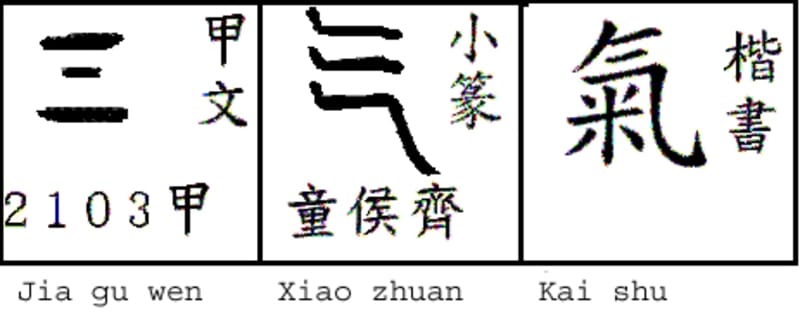
In Japanese, Ki (気) originally denotes “atmosphere,” “mood” or “vital spirit.” The character depicts steam rising from rice — an image of the invisible that produces the visible.
Morihei Ueshiba (Aikido founder) made Ki the central teaching of his art: Ki is the energy of the universe; Aikido is the training to unite with it. No technique functions without Ki — it is what transforms technique into art.
Koichi Tohei (1920–2011), Ueshiba’s most prominent student, founded the Ki Society in 1974 and developed a systematic Ki training curriculum:
- Ki no Kenkyukai — school for Ki research
- The four basic principles: calm mind in the Seika-Tanden (energy centre below the navel) · complete relaxation · positive mind · extending Ki
Kiai (気合) — the explosive energy discharge accompanying a strike or throw — is the most visible manifestation of Ki in combat. The shout is not noise but focused Ki flow.
Qi in China — Traditional Medicine and Martial Arts
In China, Qi is the central concept of Traditional Chinese Medicine (TCM): Qi flows through 12 primary meridians in the body; illness arises from blockages or imbalances.
Qigong (气功, “Qi cultivation”) is the explicit training of Qi through:
- Breathing exercises
- Standing meditations (Zhan Zhuang, “standing like a post”)
- Movement sequences (Tai Chi as moving Qigong)
In the martial arts: Tai Chi Chuan and the internal styles (Bagua, Xingyi) build on Qi as the primary combat principle. A Tai Chi master develops power not through muscular tension but through Fa Jing — the explosive release of cultivated Qi. External Shaolin styles use Qi training for physical conditioning: the famous “Iron Shirt” training hardens the body through Qi concentration.
Prana in India — Yoga and the Art of Breath
In Sanskrit, Prana means both “breath” and “life force” — breathing and life energy are one. The yogic body recognises five forms of Prana (Pancha Prana):
- Prana — upward, in the chest, the space of breath
- Apana — downward, elimination, grounding
- Samana — centre, digestion, integration
- Udana — ascending, expression, transformation
- Vyana — pervasive, circulation, connection
Pranayama (breath control) is the direct cultivation of Prana — through conscious inhalation, retention and exhalation, body and mind are regulated.
Hara — The Energy Centre
In all three traditions there is a primary energy centre in the lower abdomen:
- Japanese: Hara (腹) or Seika-Tanden (臍下丹田)
- Chinese: Dantian (丹田, “cinnabar field”)
- Indian: Svadhisthana or Manipura Chakra
This centre, approximately three finger-widths below the navel, is the source of all power — in combat, dance and meditation. In Budo, one speaks of “acting from the Hara”: movements originate from the body’s centre, not the arms or legs.
Connections to the Martial Arts
- Aikido — Ki is constitutive: without Ki understanding, Aikido is merely Jujutsu with philosophical texts
- Kung Fu / Tai Chi — Qi is the combat principle of the internal styles: minimum force, maximum effect
- Karate — Kiai as Ki explosion; kata are Ki exercises in combat form
- Taekwondo / Hapkido — Gi as the foundation, especially in Hapkido’s energy redirection
- Muay Thai — No explicit Ki teaching, but breathing techniques and the Wai Kru as energy preparation
Today — Science and Practice
Western sports science describes many Ki phenomena in different terms:
- Ki flow → proprioception, autonomic nervous system, fascial tension
- Kiai → expiration reflex mechanism, intraabdominal pressure
- Hara centring → proprioceptive training, activation of deep trunk musculature
These translations explain how Ki training works — not what Ki is. Many practitioners regard Ki as a phenomenological description: Ki is what one experiences when a skilled master throws you and one cannot understand why.
Related Articles
- Aikido — Ki as the foundation of the art of harmony
- Kung Fu and Wushu — Qi as the principle of internal styles
- Mushin — The mental state that enables Ki flow
- Zen in Budo — Meditation as Ki cultivation
- Wudang — the place where the Daoist vocabulary became anchored in martial arts
- Breathing Methods Compared — what about breath is measured — and where the vocabulary begins
- Qigong — the practice that uses this vocabulary most
Further Reading
As an Amazon Associate I earn from qualifying purchases. This costs you nothing extra.