Crosscutting
Connections, comparisons and cross-genre themes.
17 articles
Myanmar (historically: Burma) ·Pagan Empire (1044–1287); flourished: Burmese-Siamese Wars (16th–18th century)
Bando — Myanmar's Animal Style Martial Art
Bando is Myanmar's traditional unarmed combat system — with nine animal styles, strong defensive philosophy, and a history reaching back to the Pagan Empire of the 11th century.
Cambodia ·Khmer Empire (9th–15th century); bas-reliefs in Angkor document practice since at least 900 CE
Bokator — Cambodia's Millennial Warrior Art
Bokator is Cambodia's oldest warrior martial art — documented for 1000 years in Angkor temple bas-reliefs, nearly extinguished by the Khmer Rouge, UNESCO World Heritage since 2022.

Brazil ·16th–18th century (slavery era); formalized 1930s
Capoeira — The Dancing Fight of the Enslaved
Capoeira is Brazil's Afro-Brazilian martial art — developed by enslaved Africans disguised as dance, persecuted by police, now UNESCO Cultural Heritage and a symbol of cultural resistance.
USA (Hong Kong as origin) ·1967 (naming); developed 1964–1973
Jeet Kune Do — Bruce Lee's Martial Art Without Limits
Jeet Kune Do is Bruce Lee's martial art — not as rigid system but as philosophy: 'no way as way, no limitation as limitation,' the most uncompromising call for authenticity in combat.
India (Tamil Nadu as origin center) ·Vedic (~5000 BCE); first rules 1921; national recognition 1938
Kabaddi — India's Ancient Contact Team Sport
Kabaddi is India's ancient contact team sport — a raider must tag multiple defenders on one breath while chanting 'kabaddi' continuously, and escape before their breath fails.
India (Kerala, South India) ·Over 3000 years old (mythological); historically documented from 11th–12th century CE
Kalaripayattu — The Mother of All Martial Arts
Kalaripayattu is considered the world's oldest martial art — from Kerala, over 3000 years old, with the flexible Urumi sword as its pinnacle and deep connection to Ayurveda and Hindu philosophy.

Israel (origin: Czechoslovakia) ·1930s (Bratislava); IDF integration 1948; civilian version from 1964
Krav Maga — The Israeli Self-Defense System
Krav Maga is Israel's military combat system — born in the streets of Bratislava by Imi Lichtenfeld, perfected by the IDF, today the world's most widely taught self-defense system.
Mexico ·1863 (first reports); 1933 (EMLL founding, institutionalization)
Lucha Libre — Mexico's Flying Wrestling
Lucha Libre is Mexico's cultural heritage in the ring — free wrestling with masks, acrobatics, and theater, institutionalized since 1933, El Santo as immortal legend.
South Africa (Limpopo Province, Venda community) ·Mid-19th century; documented since ~1850
Musangwe — Bare-Knuckle Boxing of the Venda
Musangwe is the traditional bare-knuckle boxing of South Africa's Venda people — practiced since the 19th century as a test of courage and rite of passage to manhood, with headbutts and knee strikes permitted.
South Africa ·Legendary: Shaka Zulu era (~1670–1820s); historically: pre-colonial
Nguni Stick Fighting — African Warrior Art of the Zulu and Xhosa
Nguni stick fighting is the traditional warrior art of South Africa's Nguni peoples — with striking stick and defensive staff, a rite of passage for youth and a living cultural practice of Zulu and Xhosa.
Greece (Antiquity) ·648 BCE (Olympic introduction); flourished 5th–4th century BCE
Pankration — The Total Combat System of Antiquity
Pankration was the ancient Greek total combat sport — introduced to the Olympics in 648 BCE, combining boxing, wrestling, joint locks, and chokes: the oldest precursor to modern MMA.
Indonesia / Malaysia / Brunei / Southeast Asia ·Centuries old; first documented references in the kingdom era (before 14th century)
Pencak Silat — The Martial Art of Southeast Asia
Pencak Silat is the martial art of the Malay archipelago — deeply spiritual, rich in regional styles, recognized as UNESCO Cultural Heritage in 2019.
Indonesia (South Sulawesi, Toraja highland people) ·Pre-colonial; practiced for centuries as harvest ritual
Sisemba — The Toraja Harvest Kick-Duel
Sisemba is the traditional harvest kick-duel of the Toraja in South Sulawesi — a communal kick-fighting ritual that settled disputes and celebrated the harvest for generations.
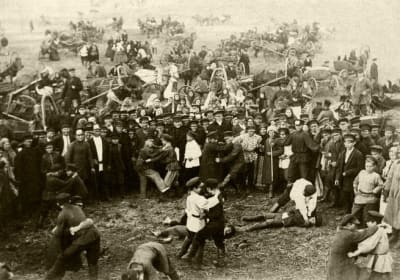
Russia / Soviet Union ·Historical roots: 10th century (Cossacks); modern form: Soviet era/Cold War; public: 1990s
Systema — The Russian Martial Art of Breath
Systema is Russia's mysterious special-forces martial art — based on breath control, total body relaxation, and the principle of using the opponent's force against themselves.
Egypt ·Old Kingdom (~2649–2130 BCE); continuous to present
Tahtib — Egypt's Pharaonic Stick Fighting Art
Tahtib is Egypt's pharaonic stick fighting art — documented since the Old Kingdom (2649 BCE), practiced today as folk dance and combat sport, UNESCO Cultural Heritage since 2016.
Vietnam ·1938 (founding in Hanoi); development under French colonial rule
Vovinam — Vietnam's Martial Art of National Liberation
Vovinam is Vietnam's national martial art — founded in 1938 by Nguyen Loc as a tool of liberation from colonialism, built on the unified principle of hard and soft.
Iran (historically: Persia) ·Parthian era (132 BCE–226 CE); flourished: Safavid period (1501–1736)
Zurkhaneh — Iran's House of Strength
The Zurkhaneh is Iran's House of Strength — a millennia-old ritual of strengthening, martial arts, music, and spirituality that unites Zoroastrianism, Islam, and Sufism.