Taijiquan — The Supreme Ultimate Fist
Taijiquan is the soft, flowing internal Chinese martial art — world-famous as Tai Chi, founded in Chen Village, deeply rooted in Taoism and traditional Chinese medicine.
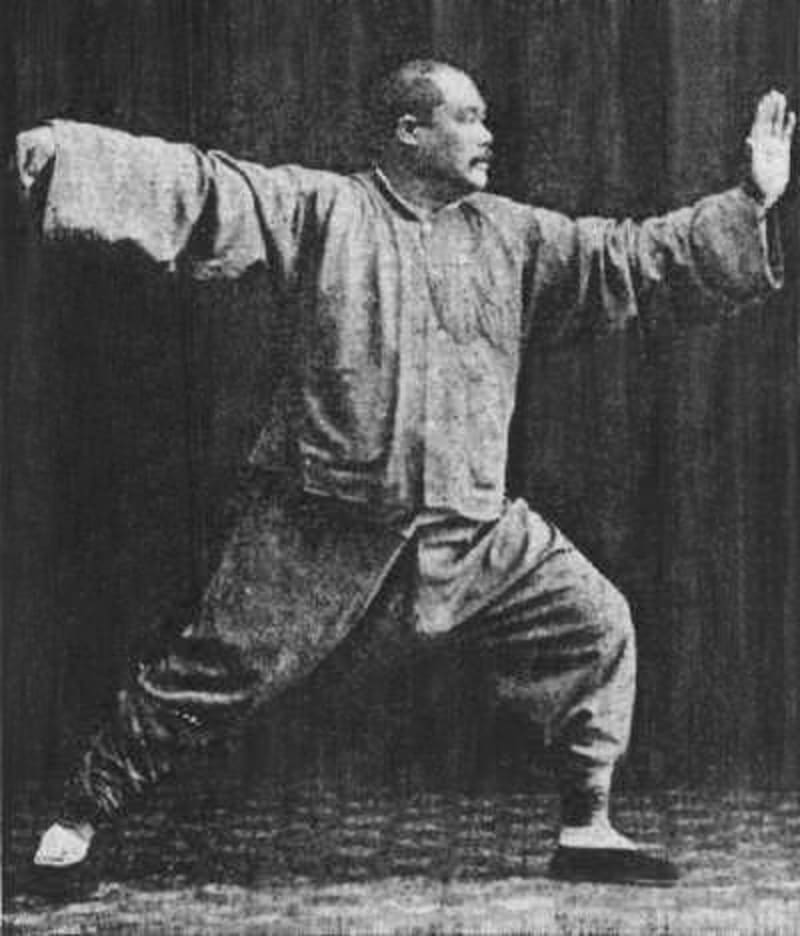
Lineage
Origins
Contents
Taijiquan (太极拳, “Supreme Ultimate Fist”) is the world’s most recognized Chinese martial art — and simultaneously one of the most misunderstood. Known in the West as “Tai Chi,” it is often reduced to a health exercise. In its historical and technical depth, it is a complete internal combat system: soft in external appearance, yet of overwhelming effectiveness when inner force (Nei Jin) is developed. Taijiquan completes the trio of classical internal Chinese martial arts alongside Xingyiquan and Baguazhang. It is founded on the Taoist principle of Taiji (太极) — the “Supreme Ultimate,” the origin of Yin and Yang. Yield, receive, redirect — no direct force confrontation. The art was developed in the 17th century in Chen Village, Henan Province, and spread worldwide through the Yang family in the 19th century. Today Taijiquan is UNESCO Intangible Cultural Heritage.
History and Founders
Legend attributes Taijiquan to the Taoist hermit Zhang Sanfeng (张三丰, Song/Ming dynasty), who reportedly received the art after observing a fight between a snake and a crane. Historians cannot verify this connection — Zhang Sanfeng’s earliest link to martial arts doesn’t appear until the 17th century, centuries after his supposed life.
The historically documented founder is Chen Wangting (陳王廷, ~1600–1680), a former military officer of the Ming dynasty who returned to his home village of Chen-Jiagou (陳家溝, “Chen Village”) in Henan after the fall of Ming rule. There he synthesized military combat arts with Daoist body work (Daoyin, 導引 — “guiding and pulling”), breathing exercises (Tu Na, 吐納 — “exhaling and inhaling”), and traditional Chinese medical theory of meridians. The result was a radically new combat system: internal, Qi-based, expressed in circular movements and silk-reeling force.
Yang Luchan (楊露禪, 1799–1872) was the turning point in Taijiquan history. As an outsider (not of the Chen clan) he reportedly learned secretly from Chen Changxing — according to tradition through a hole in a wall. He was so talented he was eventually officially accepted. After 18 years of training he returned to Beijing and became renowned — his combat power was said to be so extraordinary he earned the epithet “Yang the Undefeatable.” From his teaching arose Yang Style — today the most widespread style worldwide.
Technical Foundations
The technical heart of Taijiquan is Silk Reeling Force (Chán Sī Jìn, 缠丝劲): spiral movements that originate in the abdominal center (Dantian) and spread through the entire body — like unwinding silk thread from a cocoon.
| Concept | Term | Meaning |
|---|---|---|
| Dantian | 丹田 | Power center in the lower abdomen, Qi reservoir |
| Peng Jin | 棚劲 | Ward-off force — structural connection |
| An Jin | 按劲 | Press force — directed downward |
| Tui Shou | 推手 | Push Hands — sensitive partner training |
| Fa Jin | 发劲 | Explosive force release from the Dantian |
The 13 fundamental principles (Shisan Shi) encompass eight forces (Ba Men) and five steps (Wu Bu) — the complete tactical system.
Forms and Training
Taijiquan is trained primarily through Forms (Taolu) — choreographed movement sequences practiced solo. The original Chen form has two parts: Yi Lu (first routine, 74 movements) and Er Lu (Cannon Fist, 43 movements — explosive, powerful sequences).
Tui Shou (推手, Push Hands) is partner training: two practitioners touch arms and practice neutralizing, yielding and responding — sensitivity before strength.
Form lengths by style:
- Chen Style Laojia (Old Frame): 74 movements
- Yang Style 108-movement form: 108 movements (most practiced form worldwide)
- Standard Form (Beijing 24): simplified teaching form, developed 1956, practiced globally
Philosophy
Taijiquan is living Taoist practice. The core principle: Rou Ke Ke Gang (柔可克剛) — “The soft overcomes the hard.” No direct resistance, no force confrontation — instead receiving, neutralizing, redirecting.
Yin and Yang manifest in every movement: opening and closing, advancing and retreating, heavy and light alternate continuously. No moment is static — the “Supreme Ultimate” rotates endlessly.
“In Taijiquan there are no rigid rules. Yield when pressure comes. Use its momentum. Be like water — soft, yet capable of shaping stone.” — Yang Luchan teaching tradition
Styles and Schools
| Style | Founder | Distinctive Feature | Reach |
|---|---|---|---|
| Chen Style | Chen Wangting, 17th c. | Oldest; Fa Jin, explosive power | China, worldwide |
| Yang Style | Yang Luchan, 19th c. | Softest; 108-form, most practiced | Worldwide dominant |
| Wu (Hao) Style | Wu Yuxiang, 19th c. | Compact frame, precision | China |
| Wu Style | Wu Quanyou, 19th c. | Gentle, Push Hands focus | China, worldwide |
| Sun Style | Sun Lutang, 1912 | Combines Taiji+Xingyi+Bagua | China |
Connections to Other Martial Arts
- Xingyiquan — Sun Lutang taught all three internal arts; Sun-Style Taijiquan synthesizes all three
- Baguazhang — the circular internal system; all three form the Neijia trio
- Aikido — structurally related (yielding, Ki/Qi, circular movement) — developed independently but philosophically similar
- Qigong — Taijiquan movements overlap with Qigong practice; the boundary is fluid
Today
Taijiquan is the world’s most widely practiced martial art with an estimated 300–500 million practitioners — primarily as a health exercise. In China, collective morning practice in parks takes place daily.
In 2020 Taijiquan was inscribed on the UNESCO Intangible Cultural Heritage list.
Criticism: The separation between Taijiquan as health exercise and as martial art is now nearly total. Most Western and many Chinese practitioners never train Push Hands or Fa Jin. The martial dimension is considered lost in many schools — or regarded as irrelevant.
A widely discussed 2017 incident in China, in which an MMA fighter defeated a Taijiquan “master” in seconds, triggered a broad societal debate about the combat effectiveness of modern Taijiquan practice.
Related Articles
- Xingyiquan
- Baguazhang
- Ki, Chi & Prana
- Mushin
- Wudang — where the attribution to Zhang Sanfeng comes from — a text of 1669
- Liuhebafa — the closest relative: the same idea, with more speed and change of height
- Breathing Methods Compared — why six breaths per minute is a measured value and not number mysticism
- Breathing Programme — resonance frequency is individual, 4.5 to 7.0 — hence the calibration
- Qigong — barely separable in teaching — and a name dating from 1950
- Yang Luchan — the founder of the Yang style, through whom taijiquan left the Chen village